We are really grateful for a detailed reply written by West Yorkshire CA rail development manager Michael Sasse on behalf of Cllrs Susan Hinchcliffe (chair of WYCA transport committee) and Eric Firth (deputy chair). We had a conversation with Cllr Firth at the Northern Trains stakeholder event in November. We also spoke to Northern officials, pressing them for action.
Good news from WYCA, and our conversations with Northern, is that Halifax is on the list for Phase 1 of a Rail Accessibility Package, (under CRSTS – City Region Sustainable Transport Settlement) expected to go committee this month.
Halifax is one of 22 West Yorkshire station expected to benefit and should get: Braille station maps*, Help points, Induction loops*, Handrails with Braille*, Accessible WC and baby change facilities*, Painted lines on footpaths, Anti-slip stair edging*, Seats inside, Seats outside, Furniture Painting, Tap Rails*.
Hebden Bridge is also on the list for starred (*) items.
We guess some items may be upgrades of existing. The Halifax accessible toilet has recently had new fittings: is this enough? We think more is needed.
Work across the county should start in March 2027 and end by Aug 2028. The email talks about the recent local transport plan consultation, which is expected to be adopted at the March 2026 combined authority meeting. Then further development and “delivery of the Halifax station gateway scheme will considered alongside other priorities”.
Hadrag will continue to emphasise the point that for train passengers what matters first and foremost is convenient and modern rail facilities and early action to improve them.
Hadrag received an encouraging initial reply from Northern Trains on our shopping list of urgent needs for Halifax station. We also had a good opening conversation with West Yorkshire Combined Authority (WYCA) people who were at a recent stakeholder conference run by Northern, followed by a written response.
Key demands are summarised in the table below. Hadrag’s six-page report is based on observations at the station by Hadrag’s secretary Peter Stocks, and chair Stephen Waring.
Hadrag’s early action points
Improved safety all areas
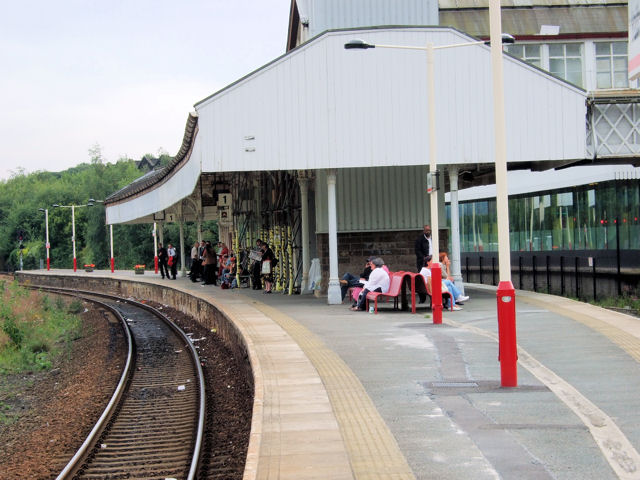
Traffic and tripping hazards on approach bridge. Crowding on platform. Stairway needs clear one-way system and central handrail. Narrow section of P2 curves the “wrong” way. Hazard when passing crowds. People need to move along.
More information screens
Existing one on P2 invisible from most of platform. Needs coordinating with where passengers are asked to wait. Additional info screens (3 or 4 extra are needed) at S end of platform showing both next trains info and list of next few trains. Maybe one outside station entrance.
Better toilets
Present single unit is modern in a sense but vary basic. We suggest replacing with modern unit at station entrance or improved facility next to waiting room.
Better access – lift
Compares unfavourably with other stations. Out-of-service periods have caused lack of confidence. Lift needs to be replaced for reliability and modern feel. Could alternative ramped access be provided?
Staff roles
Best part of station is ticket and information office – staff roles much appreciated. Welcoming, human presence. Shop is also strong feature.
The thing was – every time you visited the station you seemed to spot something else. In the end we had to “freeze” our thoughts and get on with submitting to Northern (who operate the station), track authority Network Rail, West Yorkshire Combined Authority, key stakeholder Calderdale Council and Kate Dearden MP (Halifax).
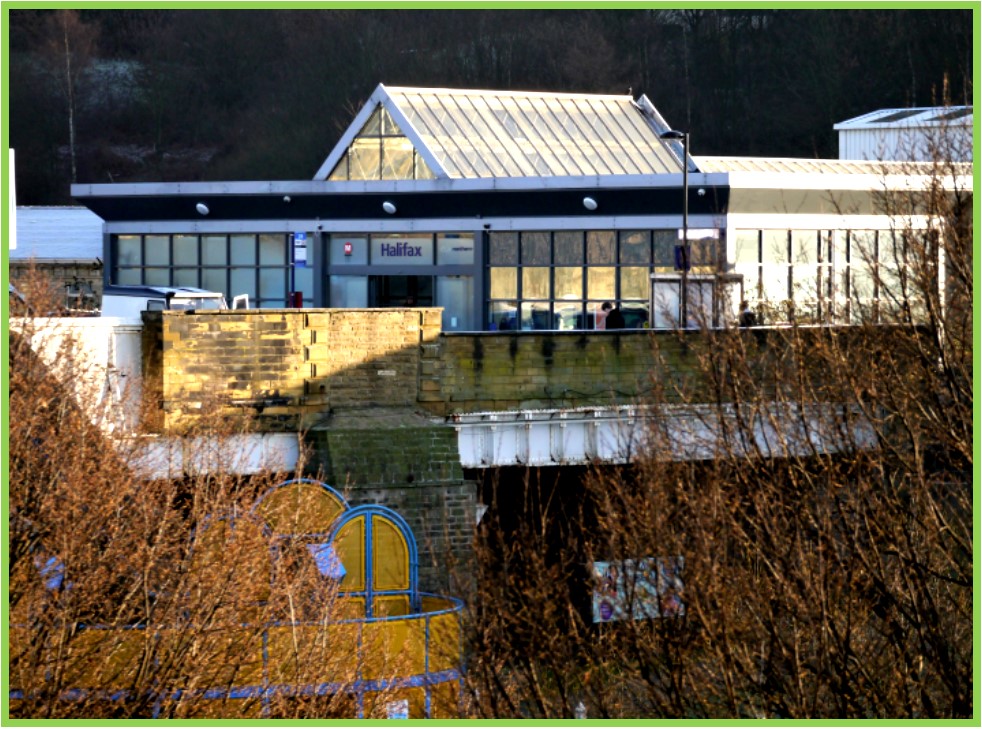
Of course there has been some history to all this. Some years ago there was a series of consultations on a station “gateway” project. That would have created a new entrance, new pedestrian approach bridge, and car parking (including disabled) at ground level. There would have been lifts so passengers could get “up and over” to and from their trains. Hadrag successfully argued bridge access should be retained to facilitate foot access from town and bus stops.
But little as far as we could see was proposed to improve surroundings for train passengers down on the platform. There was talk of Northern replacing the existing lift, as well as providing new lifts to get up from ground-level entrances. A new ticket office was proposed but on the ground floor in the new entrance building, not too convenient for people arriving on foot. New toilets were also to be on the ground floor.
After the pandemic, bodies such as WYCA found themselves short of funding as that snap of inflation took bite. And the Halifax station gateway project was “paused” (not quite cancelled), meaning an indefinite wait for further progress. (Elland station has been paused getting on for 30 years!)
Hadrag says we cannot be expected to wait for a revived “gateway” scheme. We need a new project that can be done in easy and affordable early stages focusing on items that will directly benefit train users. Our table sums up what we have in mind.
We highlight the need to improve safety. Manoeuvring past crowds of people waiting on the narrow part of Platform 2 can be frightening. (Some of us have taken to shouting “excuse me please”!) But this problem could be addressed if P2 trains were to stop further back where it is wider. Signs and announcements could politely direct people to move along.
An exit from the waiting room to the wide south end of the island platform would help. This would mean moving the passenger toilet recently refurbished been but you’d be skilled to spot the difference. Would a modern unit at the station entrance be better?
The glazed platform level sliding doors have never worked. They are out of keeping with the 19th century architecture and need to be removed and the whole area tidied up.
The station entrance becomes very congested. The interaction between pedestrians arriving from the direction of Halifax Piece Hall and cars steering onto the station forecourt is a hazard.
The best thing about the station is its ticket office, staffed by excellent people, friendly and helpful in a way that online sources, vending machines or the dreaded AI can never be. Staff must be retained, whatever hi-tech ticketing solutions arise. Halifax station boasts a footfall getting on for 2 million a year. Booking office staff can help in all sorts of ways. So let’s value them. Human contact makes rail journeys better.
We tried out the toilet at Brighouse station, still in operation after the big September blockade when you couldn’t see parked cars for buses! The single-unit all-gender loo is on the eastbound (Leeds via Dewsbury platform).
It is bigger and better than the recently refitted passenger toilet at Halifax station. To get in (remember Brighouse is normally unstaffed) you press an intercom button; someone (somewhere) answers and the door unlocks. Fittings inside are disability compliant, as you would now expect. Round the back there is a big tank of water, and a waste pipe for the sewage.
It’s a welcome installation. How many station users know about it? Could it be better signposted?
One major effect on Calder Valley line performance is the track capacity and flexibility of layout at Bradford Interchange station. Bradford famously has two terminus stations. Interchange adjoins the junction of lines to Bradford and Leeds, and trains from the Halifax direction going towards Leeds will always conflict with ones coming the other way. Extra tracks have been put in in recent years. So, for example you might find your Leeds train running into the station alongside another one from Leeds. But to continue their journeys these trains will have to cross each other’s paths – as if the lines were single track. That works OK if everything is running precisely to time, but at the moment that is often not the case. How often do we get stopped at signals coming into Bradford Interchange? These signal stops propagate delays.
The obvious answer is a new “through” station eliminating the need to reverse, instead of a terminus. Journey times could be cut. With other track upgrades Leeds to Bradford could be 12 minutes, Leeds-Halifax maybe 25 minutes.
But where would you put the new through station. Colin Elliff who spoke at our AGM in July wants a crosscity link to the line into Forster Square. This would be a massive project possibly cutting through the top floor of the Broadway shopping centre. Is it realistic to suggest that? Forster Sq feeds an indirect route (2 miles further) to Leeds and potentially has its own junction conflicts such as at Shipley. Colin talks of four tracking as part of solution.
A site that has been proposed more officially is St James’s wholesale market. This would slightly reduce the distance to Leeds cutting out the present curve. But St James’s is outside the present city centre. Is there a more central site that could accommodate four platforms fit for trains 250m in length (10 coaches)?
Could West Yorkshire’s mass transit proposals help? Final proposals for the first phase should be out next year. Could trams provide the missing link from a new station replacing Interchange and serving an upgraded Calder Valley service, to key city-centre stops and Forster Square?
Meanwhile work continues to make Interchange fit for use in Bradford’s Year of Culture, 2025.
What do Hadrag members think? – jsw.
“Grand Central 221142, 180106 and 195020 at Bradford Interchange 291023 (53295484526)” by Foulger Rail Photos from Basingstoke, UK
Letter from The Halifax & District Rail Action Group and Electric Railway Charter to election candidates, councillors, WYCA members
1. Fully electric train operation is the most energy efficient means of operating railways
…a key objective in a world that must strive to eliminate greenhouse gas emissions, notably CO2. Compared with diesel or bi/tri-mode trains pure electric trains are
simple, cheaper to build; reliable, cheaper to maintain; by 66%
lightweight giving faster acceleration and ability to serve more stops and carry more passengers;
more capable of using regenerative braking returning energy to the supply system.
Electrification is capital investment. Future payback will come through a railway that is less costly to operate, attracting more passengers, stimulating employment – and zero-carbon.
We welcome the recent West Yorkshire Combined Authority rail strategy. It is pleasing to see WYCA sticking to its guns and advocating electrification including the full Calder Valley. This and the government-proposed Leeds- Bradford electrification must seen as one scheme. The Calder Valley routes do require full electrification. Hybrid trains with multiple traction systems are heavier, waste more energy, and are potentially less reliable. By full we mean the whole route through Bradford and Brighouse to upper Calderdale. Manchester, Preston and beyond.
The full Calder Valley line was of course the top-ranked scheme in the cross-party task force Northern Sparks report 9 years ago EFT Report FINAL web.odf (transportforthenorth.com). Since then we have seen numerous other reports calling for electrification of most routes. Following Northern Sparks, campaigning groups along the Calder Valley lines launched the Electric Railway Charter. We are pleased that Calderdale Council has now twice passed resolutions calling for rail electrification. A rolling programme of electrification will reduce costs, and make the investment pay, by building up and carrying forward engineering expertise. No more stop-start.
2. Calder Valley line services – York/Hull and Leeds to Halifax/Brighouse, upper Calderdale, Manchester, Chester and Lancashire, plus Bradford-Huddersfield are due an upgrade: capacity, service, and speed.
Service improvements can be made with existing infrastructure, but we welcome proposals in the WYCA strategy for additional tracks that would allow passenger trains to overtake slower freights. Upgrades need to be made before electrification work starts. Meantime, we look for:
improved pattern; trains better coordinated between different services on the line;
new services so Calderdale can, for example, get across Manchester to access jobs, leisure destinations and connections. A service to Manchester Airport originally, promised for 2018 now, seems to be some years from delivery. This would build on existing Chester service.
all trains to call Sowerby Bridge – station with second fastest percentage passenger growth in Calderdale pre-pandemic, based on Office of Road and Rail (ORR) figures over a decade;
better service on Brighouse line – doubling frequency, faster trains direct to Leeds as suggested in WYCA rail strategy. Brighouse had fastest passenger percentage growth of… all Calder Valley line stations pre-pandemic. We also need better services N-S, Bradford-Huddersfield or Sheffield. HADRAG supports the list of possible reopening schemes mentioned on p68-9 of WYCA rail strategy – including the Crigglestone link for direct trains Bradford and Calderdale to Sheffield with attractive journey times.
Elland station – how can we get this started? Originally proposed 25 years ago!
new trains designed for passenger comfort – let’s think about access for disabled people, families, adequate toilets, view out of window, and of course provision for bikes.
3. Bradford issues
Many of us support the idea of a new through station in Bradford that would eliminate the need for trains to reverse. It would increase capacity, and cut journey times Calderdale-Leeds. For example Halifax- Leeds could come down from around 35 minutes now to 25 minutes or less. There is concern about the proposed new Bradford station site:
St James’ market has been suggested but is remote from the city centre. We ask whether:
other more convenient sites are being considered; and whether
account has been taken of effect on journey times for Calderdale-Bradford passengers.
We hope mass transit (see below) will provide a good, frequent link across the city centre reaching Forster Square at least, and open at same time as the new heavy-rail station.
4. Bradford and “Network North”.
The 30 minute Bradford-Manchester journey time suggested for a route swinging round via Huddersfield seems optimistic, dependent on capacity west of Huddersfield, and potentially locally disruptive to build, with no visible local benefit for Calderdale communities. We can see people in Bailiff Bridge and Brighouse objecting to one suggested route. So: ⦁ Would it not be better to upgrade the Calder Valley, line? With modest linespeed and capacity improvements, and electrification, Bradford-Manchester journey time would be reduced to little more than 40 minutes, perhaps less, including two stops (Halifax and Rochdale). Semi-fast services would operate between the fasts serving all stations Bradford to Todmorden. Benefits in our lifetime for Bradford and Calderdale. ⦁ A later phase might include a new high speed route, in tunnel Halifax-Littleborough, reducing the timing to about 30 minutes again with 2 stops. This is more fanciful but not impossible.
5. On mass transit we look forward to proposals about to emerge, and the upcoming consultation on initial routes. But it may be a decade before mass transit reaches Calderdale.
So: Mass transit must not be seen as a substitute for improving the heavy-rail Calder Valley line service including its branches through Elland and Brighouse, and the York-Blackpool trains. Mass transit does not mean fast transit.
Achievable heavy rail improvements can be delivered much more quickly, benefitting existing and would- be passengers. In our lifetime!
6. A major question is how any of the above is to be funded.
Rail development must be seen as investment in the interests of a green economy. It must be seen as affordable.
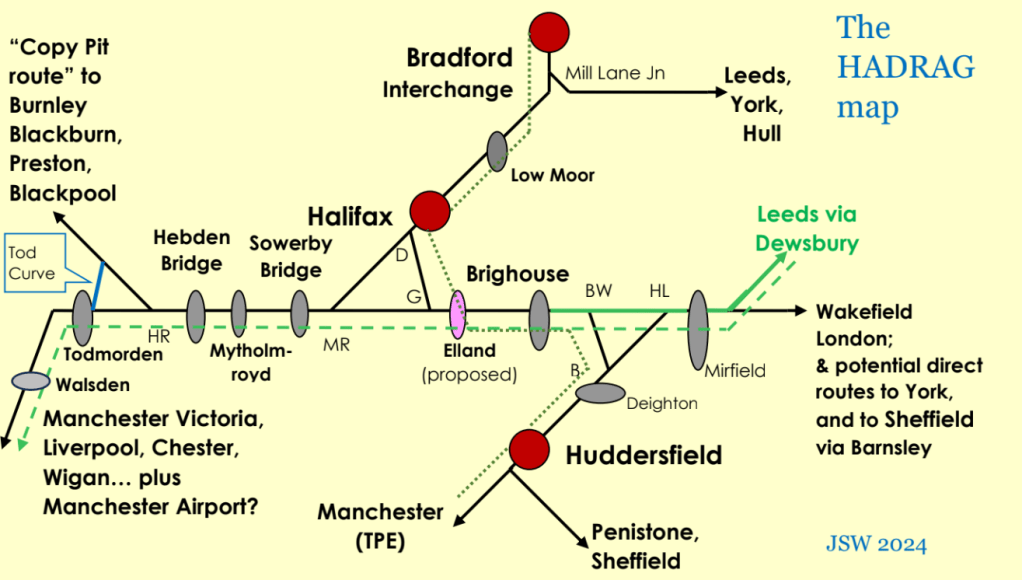
As concerned local campaigners HADRAG members would be happy to meet elected representatives or officers of the combined/local authorities either in public and/or in a small-group meeting. After the election, of course. Massive thanks to you for reading this. Map overleaf may be helpful. Looking forward to any response you are able to give or any questions you may have, with best wishes, Stephen
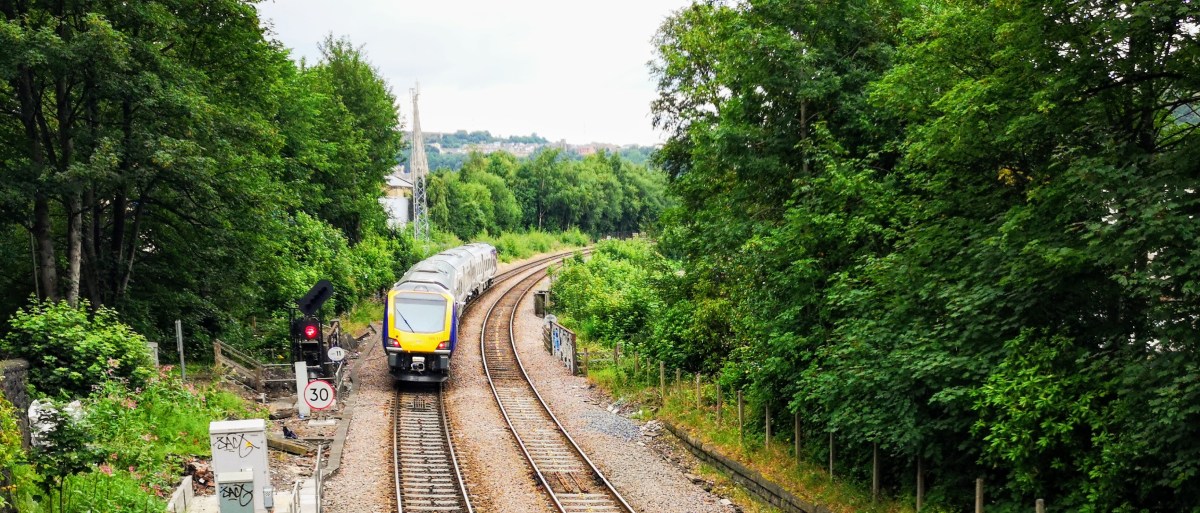
Physical evidence of improvement, new lineside objects appear by the Calder Valley railway. No real mystery, this example at Hebden Bridge is one of numerous new signals due to be commissioned this Autumn (though rumoured to be running late). Resignalling will eliminate long “block” sections reducing delays, and allow more trains to run at higher line speeds, cutting journey times.
On the day the Ordsall Chord opened last December, a Calder Valley train from Manchester Oxford Road leaves Deansgate station. Ours is the first service to use the new line, hourly on Sundays and a few trains continuing round the chord during the week. These trains will be extended to Manchester Airport, every hour, early morning till late night, when Northern has enough trains to do it.
The Oxford Rd service calls at Deansgate, useful for workplaces, Castlefield attractions, and trams to Altrincham and MediaCityUK.
But when our trains go on to the Airport it seems they’ll trundle through Deansgate non-stop. The two track section through to Piccadilly is an issue for timetabling. We need those extra platforms at Picc to make room for all the new services round Ordsall and a better timetable for routes across the North.
Huddersfield-York Sunday train calls at Low Moor station on the recent new station’s first day. In not too many years time this train should also serve Elland. Time for an update on this summer’s good news:
HADRAG welcomes this summer’s major step forward in planning Elland station as an ambitious transport hub, and calls for the Northern train operator to rise to the challenge of upgrading train services on the line. We say with a decent timetable Elland-Leeds by train could take just over 20 minutes.MORE BELOW…
In June the combined authority’s West Yorkshire and York investment committee recommended allocation of up to £22million from the West Yorkshire Plus Transport Fund (WY+TF) to an ambitious project that should make the new station at Elland a local transport hub, with pedestrian, bus, park & ride and cycle links, by 2022.
This is a major step forward for Elland, the town that has been waiting for its own railway station since Brighouse opened 17 years ago. The scheme will now move forward towards the next hurdle, outline business case, which should be completed by the end of next year. By then the project will have achieved what Network Rail calls “GRIP 4” – single option development, with detailed design (GRIP 5) following over the next two years.
The £22M (which includes allowance for 20% overrun in delivery costs) buys considerably more than just a simple train station. The key elements of the ambitious project are:
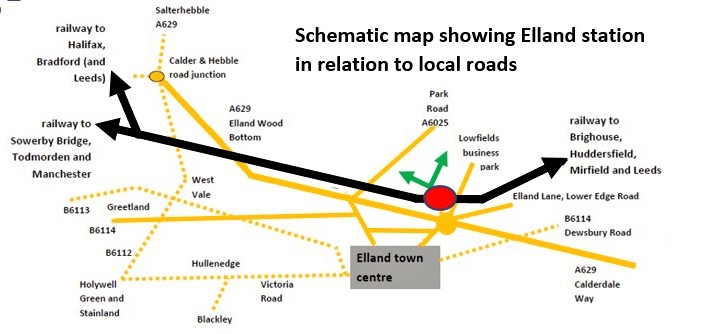
The new station itself, located at Lowfields Way. This would be next to the big “figure of eight” roundabout off the A629 bypass road;
Pedestrian, cycle and public realm improvements to link the new station to Elland town centre as well as to surrounding areas of planned employment and housing growth;
New footbridge over the River Calder. This will link to the Calder Valley Greenway on the canal bank (Route 66). It will also give good links to the station from the north and west where the Local Plan suggests significant housing growth. Current employers in the area could also benefit with opportunities for “intensification” of activity;
New bus infrastructure to enable bus-train interchange at the station, providing sustainable access from a wider catchment area; and
Dedicated station car park and highway access to bring in park & ride to bring in passengers from existing and new housing area around the periphery of the town.
This sounds very much like the sort of local transport hub that HADRAG called for just four years ago after we held our 2013 annual meeting in Elland .
We understand the car park could be built on two levels, and hope bus operators will be persuaded to provide services linking the station and all the surrounding communities. Sustainable commuting and leisure also look to be encouraged by the scheme. We look forward to being able to access the station on foot or with a bike from the canalside “green” route.
The station also has an obvious potential role in hospital transport for staff, patients and visitors. Could shuttle buses linking the two NHS sites at Calderdale (Salterhebble) and Huddersfield (Lindley) be developed to call at Elland station?
In terms of the local community, HADRAG says Elland station, with good park & ride and sustainable transport links should be seen as serving not just Elland itself but also Greetland and Stainland, a total “Greater Elland” population of more than 20,000. As such the station will have a catchment as populous as the areas served by stations like Brighouse or Sowerby Bridge. In fact we reckon any one of Sowerby Bridge, Elland or Brighouse stations potentially serves as big a population as the two main upper Calderdale stations – Todmorden and Hebden Bridge – combined.
Upper valley-Elland-Brighouse rail corridor: we hope for timetable improvements!
But of course Todmorden and Hebden Bridge, along with Halifax, currently have almost double the train service level of either Sowerby Bridge or Brighouse. Sowerby Bridge (and Mytholmroyd) should see some improvement next year with the Blackpool-York trains stopping. We really hope Northern will build on that at the end of 2019 when the next big timetable recast comes. And of course HADRAG continues to argue the case with train operator Northern for a better deal for the Brighouse corridor. In our response to Northern’s timetable plans we have specifically asked for future timetables to include make allowance for all trains that currently stop at Brighouse also to serve Elland. We have also want the Manchester-Rochdale-Brighouse-Leeds “valley bottom service” to run later at night and on Sundays, something that does not, so far, seem to feature in Northern’s plans.
As an ambitious transport hub, Elland station will be another reason to upgrade the timetable. Opening 22 years after neighbouring Brighouse, the new station may still seem frustratingly in the future. But at least by 2022 we hope there may be further timetable improvements. Under the existing service patterns, Elland would be served by hourly trains on the Manchester-Brighouse-Leeds and Huddersfield-Bradford-Leeds routes, effectively an hourly stopping service to key destinations. We have joined our colleagues in the Upper Calder Valley Renaissance Sustainable Transport Group in calling for a service from the upper Calder Valley to Huddersfield, meeting commuting, educational and other sources of demand. That would give an additional service along the Sowerby Bridge-Elland-Brighouse corridor. But we also need better services Elland/Brighouse-Leeds.
Potential for fast journey to Leeds
We want Northern, Network Rail and their train planners to rise to the challenge of providing an upgraded timetable for Elland/Brighouse rail corridor. It probably needs some capacity improvements in the Huddersfield and Mirfield area as well as a more ambitious approach by the train operator.
Finally, HADRAG has repeatedly, over may years, pointed out the potential to speed up trains on the direct Brighouse-Dewsbury-Leeds route. At present Brighouse-Leeds takes about 34 minutes, calling at nearly all stations. So that would be 37-38 minutes from Elland. A fast service, with maybe just intermediate stop, would easily cut the Brighouse-Leeds journey to 20 minutes. So stations all the way up the valley would get a Leeds service that could be 10-15 minutes faster than at present. Elland-Leeds could be about 23 minutes.
What could go wrong? One complication is the TransPennine Route Upgrade. This is the project that was meant to include Huddersfield Line electrification, though it sounds increasingly as though it may not. With or without electrification there is likely to be upgrade work to improve capacity that will mean diversions of TransPennine Express via the Calder Valley line while the work is going on. The plan seems to be that this will be completed before Elland opens. Fingers crossed, then. -JSW
Commuters reported confusion down at the station after another landslip at Salterhebble blocked the Halifax-Sowerby Bridge route in early March. Trains were diverted Sowerby-Leeds via Brighouse, and a limited Leeds-Halifax/Huddersfield service was maintained, so canny users could get a train to Brighouse and pick up diverted services there (though a separate problem in East Lancs delayed Blackpool-York trains). Thankfully Network Rail got the line clear by teatime the day after the landslip. A speed restriction remained in place at time of writing, whilst work continued to stabilise the cutting under Dudwell Lane. We were disappointed more trains were not diverted between Halifax and Sowerby Bridge by reversing at Greetland, which might have maintained a train service Sowerby Bridge-Bradford during the blockage and provided better for Halifax. We think this sort of thing happened in the past, but hear that the signals at Greetland now only allow such a move in one direction. Progress? Perhaps not.
As part of the rail investment in the North, Network Rail are investing over £1 billion on targeted upgrades to the rail network, helping to support and grow the regional economy.
The Calder Valley Route Upgrade is part of this investment programme. The route upgrade will deliver faster services and improve connections between key towns and cities across the North.
As part of the upgrade plan, we will be carrying out track and signal upgrades along the Calder Valley route, this will pave the way for faster journeys.
We have already completed the upgrade to signals and track between Manchester Victoria and Littleborough. We are currently working on upgrades between Littleborough and Bradford Interchange.
From 19 March until 15 May 2017 (excluding Easter and Tour de Yorkshire weekends), we will be working weekends to renew and lower track in locations along the route. We’re working closely with train operators to communicate changes to services with passengers and advising passengers to check before you travel at www.nationalrail.co.uk
We understand that our work will also impact on communities (especially people who live and work nearby the railway); we will notify in advance of working, explain what work is planned and when we expect our work to be noisy.
We’re working with businesses, local authorities, media and politicians to make sure the general public know what is happening and when.
We are holding a series of community information sessions about the Calder Valley Route Upgrade; we would like to invite you to attend. Representatives from Network Rail and our contractors will be on hand to answer any questions about this planned work.







 Halifax and District Rail Action Group