Aspirations for more

Network Rail’s HADRAG presentation was about projects in the current 2014-19 control period (CP5) and our guests preferred not to be drawn on any more ambitious aspirations that might be considered in the future. There are obvious projects, some that we have called for in the past and that our friends in the UCV Renaissance Sustainable Transport Group included in a list of priorities published a year ago. Much of this is not so much investment in new railways but more about restoring valuable infrastructure short-sightedly taken away over the last few decades, such as:

  • Loops/four tracking between Hebden Bridge and Mytholmroyd to allow freight trains to be overtaken.
  • Putting back four tracks in the Huddersfield/Mirfield/Dewsbury area creating capacity for more trains through Brighouse as well as on the Huddersfield line.
  • Halifax platform 3 as through loop.
  • The “Crigglestone Curve” linking the lower Calder Valley and Barnsley routes for a service through Brighouse to Sheffield —advocated years ago by HADRAG!
  • And of course CVL electrification via both Bradford and Brighouse.


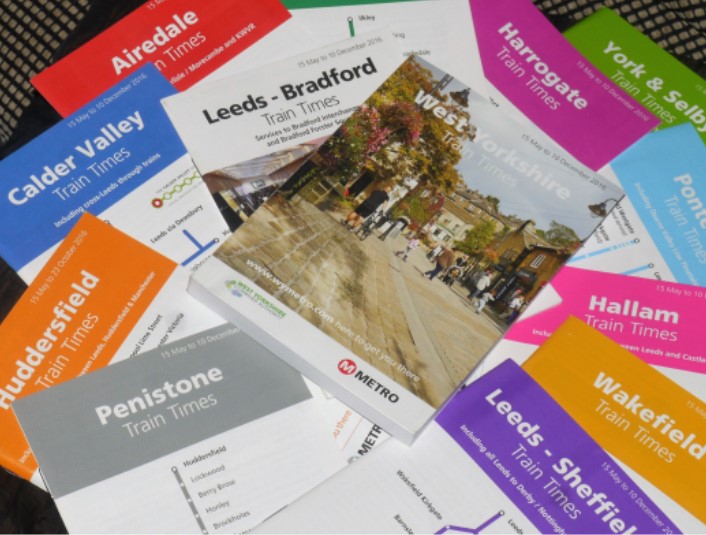
Timetable booklets are a mess.

Sorry Northern (Arriva Rail North), we support all the good things you are doing and planning to do to improve services, but there’s no polite way to say this. Your new line timetable booklets are a dismally poor substitute for the excellent former Metro booklets. As expected, the train operating company has taken over publication from West Yorkshire Combined authority. There seems little point WYCA expending resources on duplicating a role given to the TOCs. Sadly, however, whilst WYCA/Metro’s single Calder Valley Line booklet showed all trains running on our line between Leeds and Blackpool/Manchester plus the Brighouse line, that information is now spread across three or four separate publications. Booklet 8 shows York-Blackpool services only. Booklet 36 shows Leeds-Todmorden-Manchester services.

New Booklet 45 shows all Northern services Leeds-Huddersfield and Hebden Bridge including Brighouse trains. This is a sensible idea. But there are no times shown for stations outside that area, through trains to York, Blackpool and Manchester being indicated only by footnotes with no indication of journey time or intermediate stops such as Rochdale or Blackburn. It’s good to see that Grand Central services are shown. But TPExpress trains on the Huddersfield Line are left out which means there is no timetable booklet showing the complete train service between Leeds and Huddersfield. Surely ridiculous. It’s doubly strange because we were told TPE and Northern would be cooperating, and because Northern’s Wakefield Line booklet (42) also shows East Coast and Cross Country trains. We’d actually like timetables that show all trains on a given route. A separate mini-timetable (44) shows Blackburn-Man Vic “Tod Curve” trains—one of three separate booklets needed to find all trains between the Lancashire towns of Accrington and Blackburn!  The  new format also means full-line posters are no longer displayed on West Yorkshire stations. And at the start of the new timetable Halifax station had only been supplied with local line booklets, not other WY routes. “MetroTrain” timetables served the county’s rail users well for over 40 years and were also available as an all-county book. What we have now is a confusing mess. We hope it can be sorted out for the May timetable change. It’s in our New Year message to Northern!

Track and signalling works target journey time and capacity

Network Rail managers joined members and friends of Halifax & District Rail Action Group at our December open committee meeting at Halifax Town Hall. Vanessa Conway (project sponsor) and Salim Patel (project manager) presented on the Calder Valley Route upgrade, the project that will enable higher line speeds and increased capacity between Bradford and Manchester. Completion is due by Autumn 2018.

Funded by farepayers, taxpayers and property income, and with 35,000 of its own staff, Network Rail is the effectively nationalised agency that owns and operates Britain’s rail infrastructure — maintaining, renewing, replacing and enhancing. Regulated by ORR, the Office of Rail & Road, it also coordinates and manages the railway timetable between different passenger and freight operators.

Britain’s rail infrastructure comprises 20,000miles of track, 32,000 bridges and tunnels and 8200 commercial properties, along with 2500 stations the operation of which is largely devolved to train operators. Passenger demand nationally grew by 100% over the last 20 years and is expected to double again by 2041 alongside freight growth of 90%. In the North, rail investment is seen as part wider transformation under the Transport for the North banner. Long term, this means “Northern Powerhouse Rail” and a new line across the pennines, but in the meantime smaller schemes like the Calder Valley Line enhancements, radiating from the Manchester-centred  “Northern Hub” are essential to get more trains carrying more passengers at higher speed.

West Complete, East Ongoing

The Calder Valley upgrade falls into several parts. Journey time interventions (JTI) involve upgrading track for higher speed at various points between Manchester and Bradford. The boundary between Network Rail “LNE” and “LNW” so-called “routes” – the old regional boundary west of Hebden Bridge is an administrative dividing line. The “West” project ending at Todmorden has been completed over the last year and includes a new west-facing bay platform, now operational, at Rochdale station as well as higher speed limits which are now in place. The Rochdale “turnback” platform will allow trains from the west terminating at Rochdale to layover in the station clear of the main lines increasing capacity and reducing delays for through CVL services. North-west trains that currently terminate at Manchester Victoria station will increasingly come through to Rochdale and to Stalybridge in turn releasing platform capacity at “Vic”. And of course by the end of 2019 most Calder Valley Manchester trains will be running through to/from Chester, Liverpool, Southport or Manchester Airport.

Work has also now started on the “East” interventions from Hebden Bridge to Bradford. HADRAG is seeking further clarification on certain details for example precise linespeed improvements. We understand however that the aim is, by the end of 2018, to increase general line maxima from 60mph (Hebden-Halifax) and 55mph (Halifax-Bradford) to at least the “70” that already rules on the West section. Intermediate speed restrictions, for example at Milner Royd Junction seem likely to remain for the time being though there seems to be a possibility Milner Royd could be remodelled in a future project. It does seem, however that the 30mph restricted approach to Halifax from Shaw Lodge will be improved as part of the current scheme. Works to be carried out include, at various points, track lowering or slewing to improve alignment, work in tunnels, new track and re-railing. “Route hardening” will improve the quality and resilience of track and signals.

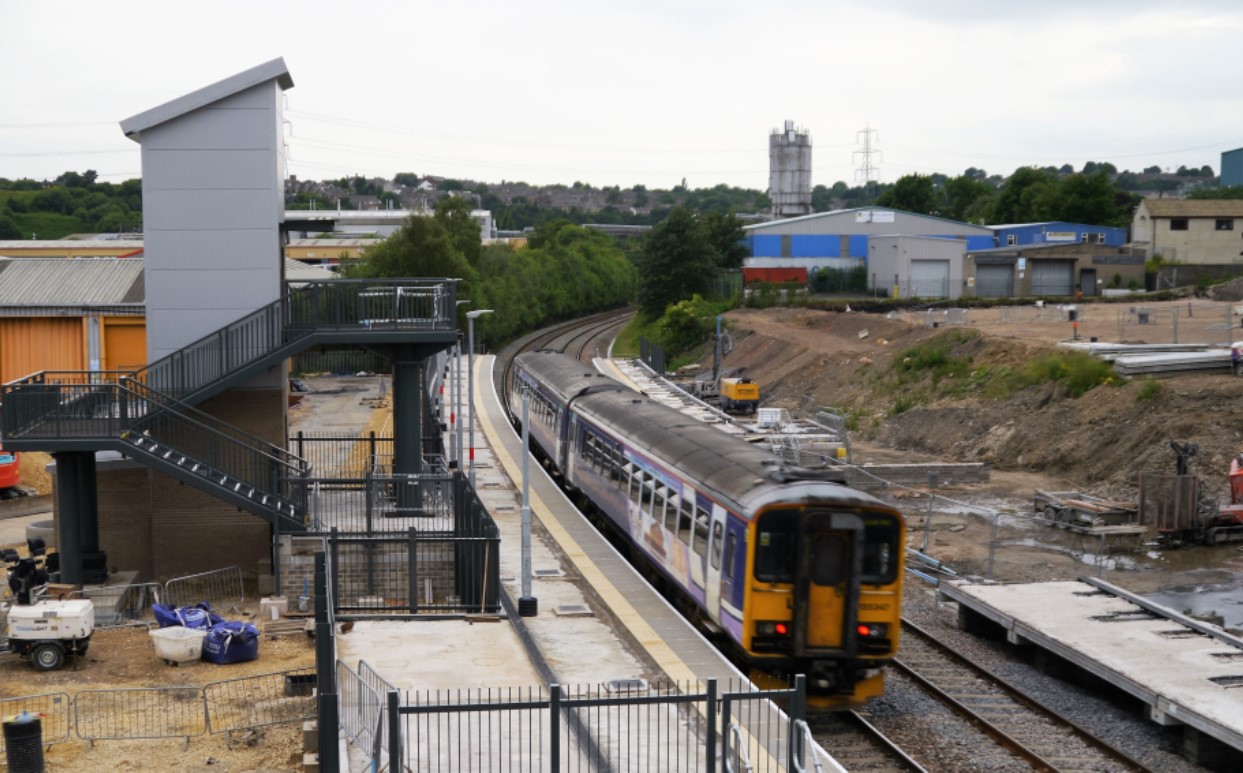
Network Rail’s presentation also included the new station at Low Moor (by May’17), and access-for-all works at Hebden Bridge with new lifts and platform level access (by end of 2018).

Signalling and Capacity

Huddersfield to Bradford resignalling is a slight misnomer because in order to deliver Manchester-Bradford capacity improvements the work must extend to Hebden Bridge. Traditional signalboxes at Hebden Bridge, Milner Royd, Halifax and Bradford Mill Lane will become redundant with control transferred to the rail operating centre (ROC) at York. Work starts this March and is in two stages, both to be completed by October 2018. Stage 1 is to bring existing signals around Huddersfield and as far west as Greetland Junction under York ROC. Stage 2 is enhanced signalling of the CVL section from Hebden Bridge through Halifax to Bradford. When this is complete trains will be able to operate at 4 minute headways all the way from Manchester to Bradford. This does not, of course, mean 15 trains an hour! What it does mean is more signals between Hebden Bridge and Sowerby Bridge, and between Halifax and Bradford, reducing delays caused by existing long sections and allowing a significant increase in frequency without compromising punctuality. Currently, for example, a train can not proceed from Halifax to Bradford until the one in front has passed a signal nearly 4 miles ahead at Wyke; the enhancements deal with this.

Linked with the resignalling are two additional crossover tracks to be installed at Bradford to allow up to three simultaneous parallel movements in/out of the Interchange station where, famously, all trains reverse in order to continue their journey.

“East” linespeeds will be raised when the new signalling is ready. All should be done by 20 October 2018. Journey time “fast” Bradford-Manchaester with four intermediate stops should come down from current 58-61 minutes to 53-54 minutes, probably at the end of 2018. This may not seem spectacular and is a bit less ambitious than everyone originally hoped but it is a marketable improvement. The journey time estimate is based on current (Class 158) trains; there’s hope the new CAF trains (Class 195) ordered by Arriva may perform better. More important perhaps are the capacity improvements that will lead to more frequent services, starting with Northern’s commitment under the Arriva franchise to an extra Bradford-Manchester train every daytime hour through to the Airport 7 days a week by the end of 2019. We hope more will follow.

The HADRAG meeting with Network Rail, a public body sometimes criticised for being less than public-facing, was at their initiative.

We are grateful to Network Rail for that, and look forward to developing the relationship in the future.

Tantalising Scene

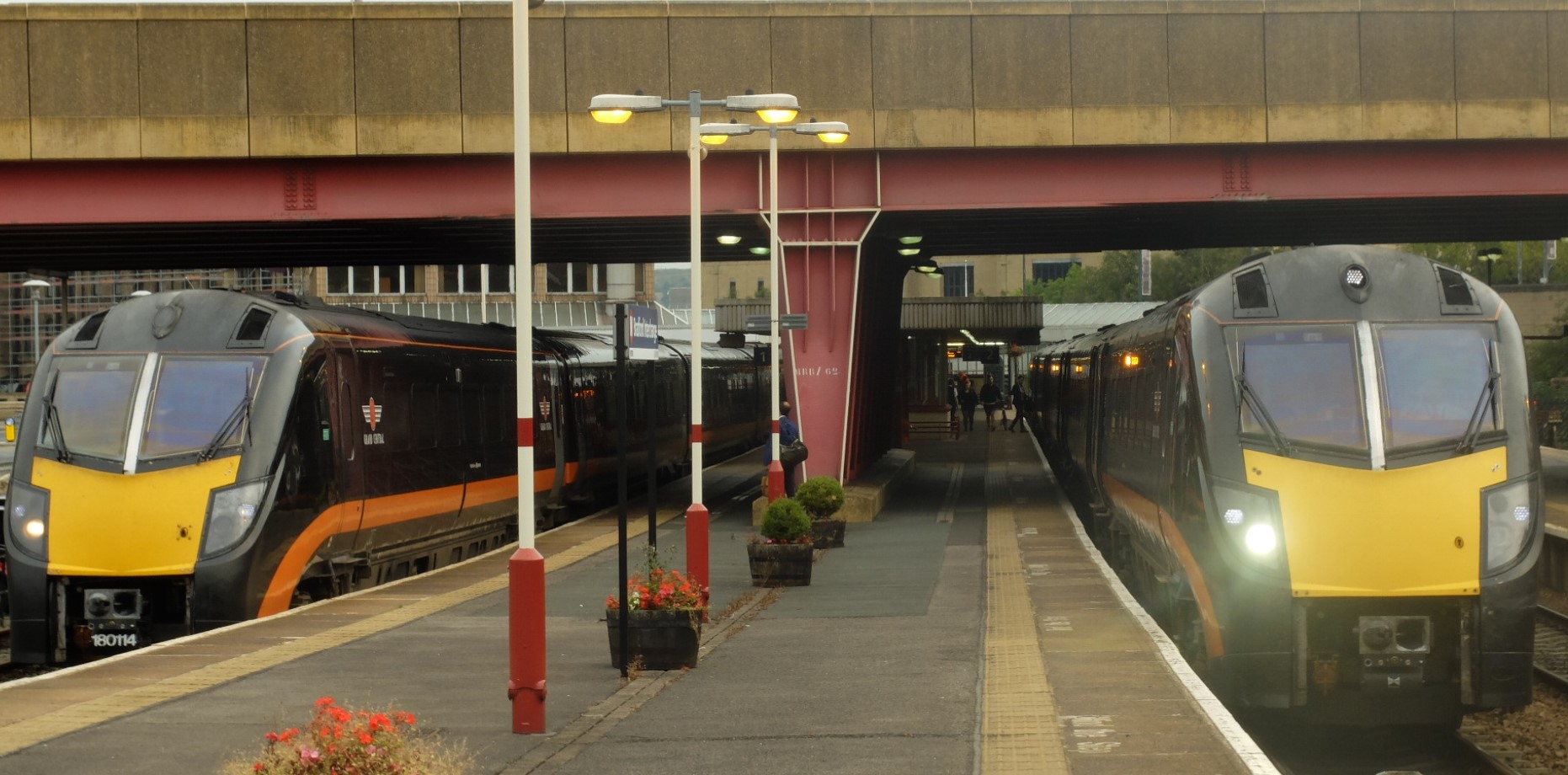
History in the making? The scene looking north-east(-ish) from Halifax station hints tantalisingly at the future. Observant Leeds-bound passengers know that if the signal at the end of the platform shows a yellow (never amber on the railway!), they’ll be crawling to a halt at a red just this side of Beacon Hill Tunnel. A preceding train has to pass the signal nearly 4 miles away at Wyke before the next can go. Network Rail’s resignalling scheme over the next 18 months aims to sort the  problem, allowing trains at closer headways all the way from Manchester to Bradford, meaning higher frequencies as well as speeds and—hopefully—better punctuality. It will also make the historic signalbox standing on the former platform redundant as control of the signals is transferred to York. What new use will the old “box” find? The train on the left, a grim old Class 150 unit arriving at Platform 1 for Manchester Victoria, is also going to change and before 2020 will more likely be one of Northern’s brand-new trains now being built by CAF in Spain. The “150” itself, years of life remaining, is promised good-as-new refurbishment. Truly tantalising is the vacant track bed next to the Platform 2 line, with much interest locally in the idea of bringing Platform 3 back into use. Wider development promises to create a transformed gateway between station and town. A third platform would spread the crowds and allow more flexible operation, though we may still have a job on to persuade the railway of its necessity.

History could have been different. Back in the 1980s Halifax & District Rail Action Group started up against a background of shady proposals by British Rail to reduce the line from Sowerby Bridge to Bradford to single track. Ambitions in West Yorkshire put a stop to that idea so that after 30 years of improvement that relied on cut-back infrastructure, we now have a railway that’s not too hard to upgrade, hopefully overcoming current worries to transform services by three years from now.

So, settling in to 2017, we wish HADRAG members and friends, passengers actual and would-be, happy travelling in the future! – JSW

WYCA Also Wants More!

The new Northern franchise is indeed transformational. But we aren’t the only ones saying even more is needed to meet potential travel needs. West Yorkshire Combined Authority oversees the Metro brand in the county. At a recent  transport committee meeting, a report from officials highlighted gaps and areas for improvement, some of them close to HADRAG’s heart. “Adjustments” and smaller changes for discussion with Northern include:

  • Moving to 2 trains/hr at Low Moor
  • Sunday trains Leeds-Dewsbury-Brighouse-Manchester (one of two routes in the city region without a Sunday service);
  • Earlier Sunday trains Hebden Bridge/Brighouse to Leeds.
  • Possibility of starting the Bradford-Manchester Airport service before 2019 (it is actually to start 2017 on Sundays)…

And classed as “enhancements”:

  • WYCA goal of 4 trains/hour between Bradford and Manchester…
  • …with restoration of link between local stations like Walsden and Bradford. We could support that!

A separate report sets out a rail narrative for West Yorkshire. Elland tops the list of new stations listing benefits of connectivity, modal shift, network access and park & ride.


Network Rail enhancements on agenda at HADRAG’s December open meeting

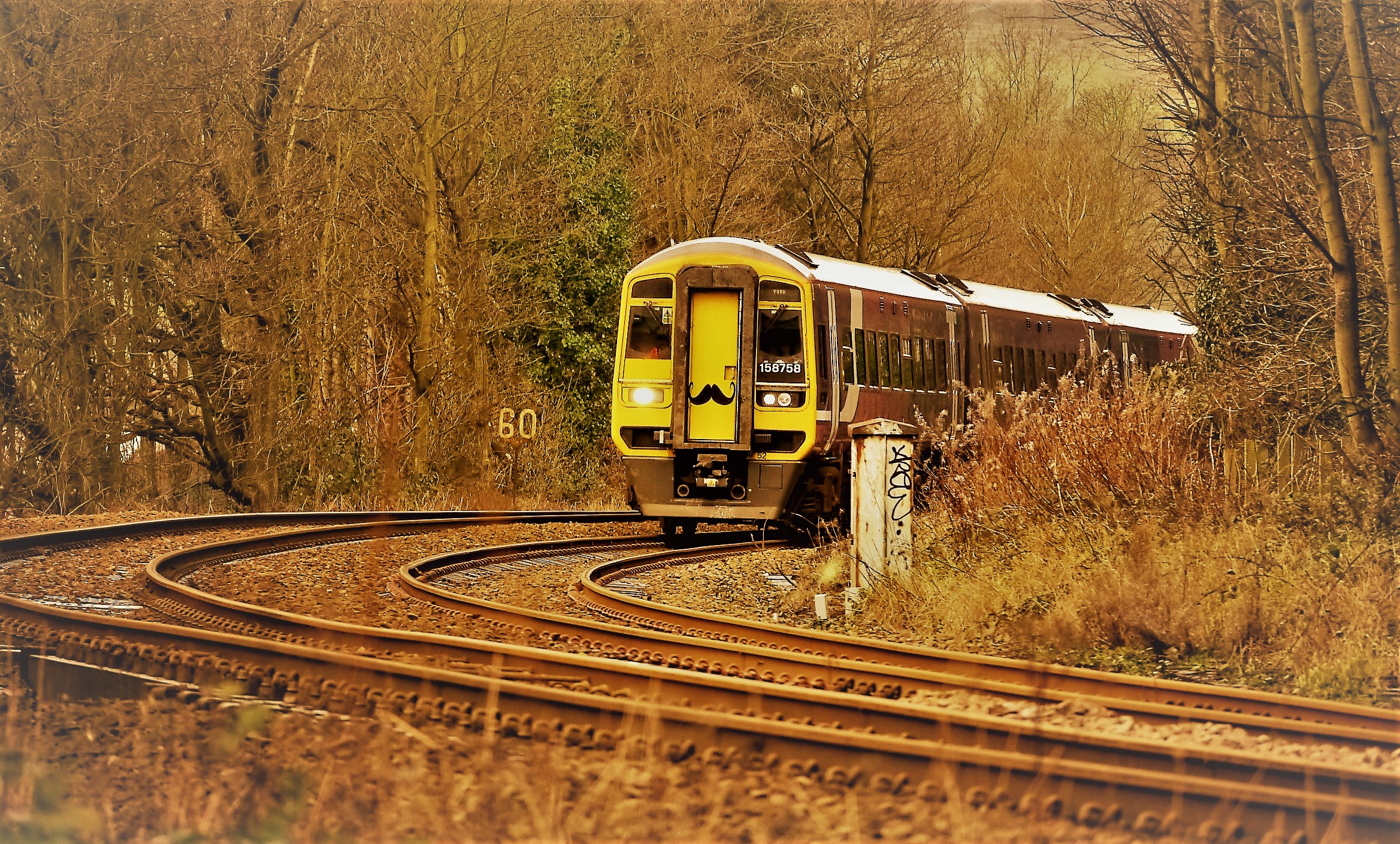
p1020111-cow-lane-60sign158-2HADRAG, the Halifax & District Rail Action Group is expecting a panel of three speakers from Network Rail to talk about the current infrastructure and signalling improvement schemes on the Manchester-Bradford Calder Valley Line. All interested rail users – actual and would-be! – are welcome at the group’s open committee meeting, on Monday 19th December starting 7.30 pm at Halifax Town Hall, HX1 1ZS

The list of speakers given to us by Network Rail is:

  • Sarah Jones, communications manager for the Trans Pennine and Calder Valley schemes;
  • Vanessa Conway, project sponsor
  • Salim Patel, project manager.

HADRAG expects an interesting hour or so of presentation and discussion and may be sending its guests away with more questions than can be answered on the night!

Work has already been going on west of the Pennines to improve the West section of our Calder Valley route. A new turnback platform is already operational at Rochdale, and other works on the track are expected to yield higher line speeds. There will also be benefits between Todmorden and Bradford, with work on the East section about to start. Currently the linespeed maximum is 60mph Hebden Bridge to Halifax and 55 Halifax to Bradford. HADRAG is hoping that that these limits will be raised.

Together with the track enhancements is a resignalling scheme, somewhat confusingly described as “Huddersfield-Bradford” as it must also go out to Hebden Bridge in order to deliver improved headways west of Milner Royd (Sowerby Bridge) as well as Halifax-Bradford. This should enable improved service frequencies and better punctuality.

We understand that the Bradford-Manchester journey time for a train with intermediate stops at Halifax, Hebden Bridge, Todmorden and Rochdale could come down from about an hour to 52-53 minutes by 2019. More trains are planned on the route under the Arriva Rail North “Northern” trains franchise including services to Manchester Airport via the new “Ordsall Chord” line now under construction across Manchester. And in the slightly longer term West Yorkshire Combined Authority has an aspiration for four trains an hour Bradford-Manchester. Combined with the Brighouse line services and the York-Blackpools, that’s quite a lot of trains along the routes through Calderdale. Of course, we still want more for Brighouse – and more stopping at Sowerby Bridge!

One System Public Transport could yield benefits for Brighouse-Elland corridor

We’re hoping that the city region’s transport strategy could encourage development of the rail corridor through Brighouse and Elland.

The following from HADRAG’s newsletter Halifax & District RAIL VIEWS, Autumn issue (October 2016):

<< Public consultation on West Yorkshire’s 20-year Transport Strategy closed earlier this Autumn. Coordinated by West Yorkshire Combined Authority (WYCA) and involving district authorities and the wider Leeds City Region local enterprise partnership, the strategy is written at a “high level” which means there is little detail of specific schemes, but that did not stop HADRAG calling for development of the Elland-Brighouse rail corridor, not just for a proposed city-region metro system but also for faster journeys between Calderdale, Huddersfield, Leeds and beyond.

With a cross-cutting theme of environmental health, wellbeing and inclusion, the five core themes of the Strategy are:

  • Road network — for efficient movement balancing needs of different users.
  • Places to live and work — making cities, towns and neighbourhoods more attractive.
  • One System Public Transport — transformational, connecting different modes.
  • Smart futures — using technology to better plan, manage and improve user experience of transport.
  • Asset management and resilience — involving best use of existing/future transport assets, fitness for future, sustainable, environmentally friendly and cost effective.

Centrepiece of the One System theme is a multimodal mass-transit network encompassing Halifax, Huddersfield, Barnsley, Wakefield, Selby, York, Harrogate, Ilkley and Skipton. “Heavy rail” is the core solution here and specifically emphasised for the Leeds-Bradford-Halifax-Huddersfield/Dewsbury-Leeds corridors. Use could also be made of “tram-train”, light rail or bus rapid-transit. Transfer of some rail routes to tram-train, using both existing train lines and new town and city alignments is seen as a possible means of providing the capacity for rail growth around Leeds station. Part of the idea maybe that if certain services (say from the Harrogate Line) could run tram-style into the city this would release heavy-rail capacity for more services going into or through the main station. Some campaigners may have mixed feelings here.

The first broad policy under the One System theme is to enhance the rail network as the core of an integrated ‘metro-style’ public transport system. Chiming with Rail North objectives, the aim is “to replicate across the city region the quality of rail travel (capacity, frequency, journey times, quality) currently enjoyed by customers using services between Leeds, Bradford Forster Square, Skipton and Ilkley”. These are of course the electrified Airedale and Wharfedale Lines.

And, talking of electrification, West Yorkshire will also press the case with the rail industry for a rolling programme of electrification building on the Trans-Pennine (Huddersfield Line) scheme and prioritising the Calder Valley and Harrogate lines. Still under the general heading of rail network enhancement, the policy promises “solutions to improve connectivity for strategic growth areas”, including Leeds-Bradford airport. New stations mentioned include Elland (as well as Thorpe Park in eastern Leeds).

The hope is that more local trains will be cross-city, continuing through rather than terminating at Leeds. This is seen as more efficient, enabling longer-term growth. Leeds train station will become the Yorkshire Hub (as in a sense it is already) linked to high-speed (HS2) platforms expected in the mid-2030s. The aim, indeed, is to be “high speed ready”, which we take to mean connecting regional links in place before HS2 arrives. (HS2 does seem likely to go ahead!)

On “HS3”, or Northern Powerhouse Rail (NPR), the Strategy calls for a Leeds-Manchester route with an intermediate hub in West Yorkshire. This is now thought likely to be in Bradford, causing us to speculate about routes and links with existing railways including most obviously the Calder Valley Line. Expect more on this from Transport for the North soon.

Remember, the NPR aim, in about 20 years time, is a 30 minute journey Leeds-Manchester. So let’s hope it’s not still 35 minutes Halifax-Leeds! >>


Adoption Group Wanted for Halifax Station

Northern’s franchise agreement requires them to develop community links. Former individual station adopters have been “let go” in favour of encouraging group adoption. This has caused some unhappiness with the former adopters who used to play a regular voluntary role reporting faults and issues. Moving on, however, Northern is understood to have a budget to work with local groups who would take initiatives to make their stations more attractive. Brighouse, Sowerby Bridge and Mytholmroyd undoubtedly show the way for others, involving local businesses in providing sponsorship for small projects, drawing in schools and community groups. It all helps to make our stations places where people want to go. And it should not be about volunteers taking on jobs (such as cleaning) that are properly done by rail staff or contractors. So what about Halifax? There may be less scope for gardening at our big-town station but more opportunity for other community-led improvements.

If you think you could help run such a group for Halifax station, we’d like to hear from you!


More Awards for Station Groups

In the Bronte Garden, one of numerous excellent information boards celebrates “Gardening at Sowerby Bridge Station”. Another board commemorates Branwell Bronte who worked at the first Sowerby Bridge station, and in front of it an traditional wooden seat has been sponsored by ACORP, the Association of Community Rail Partnerships.

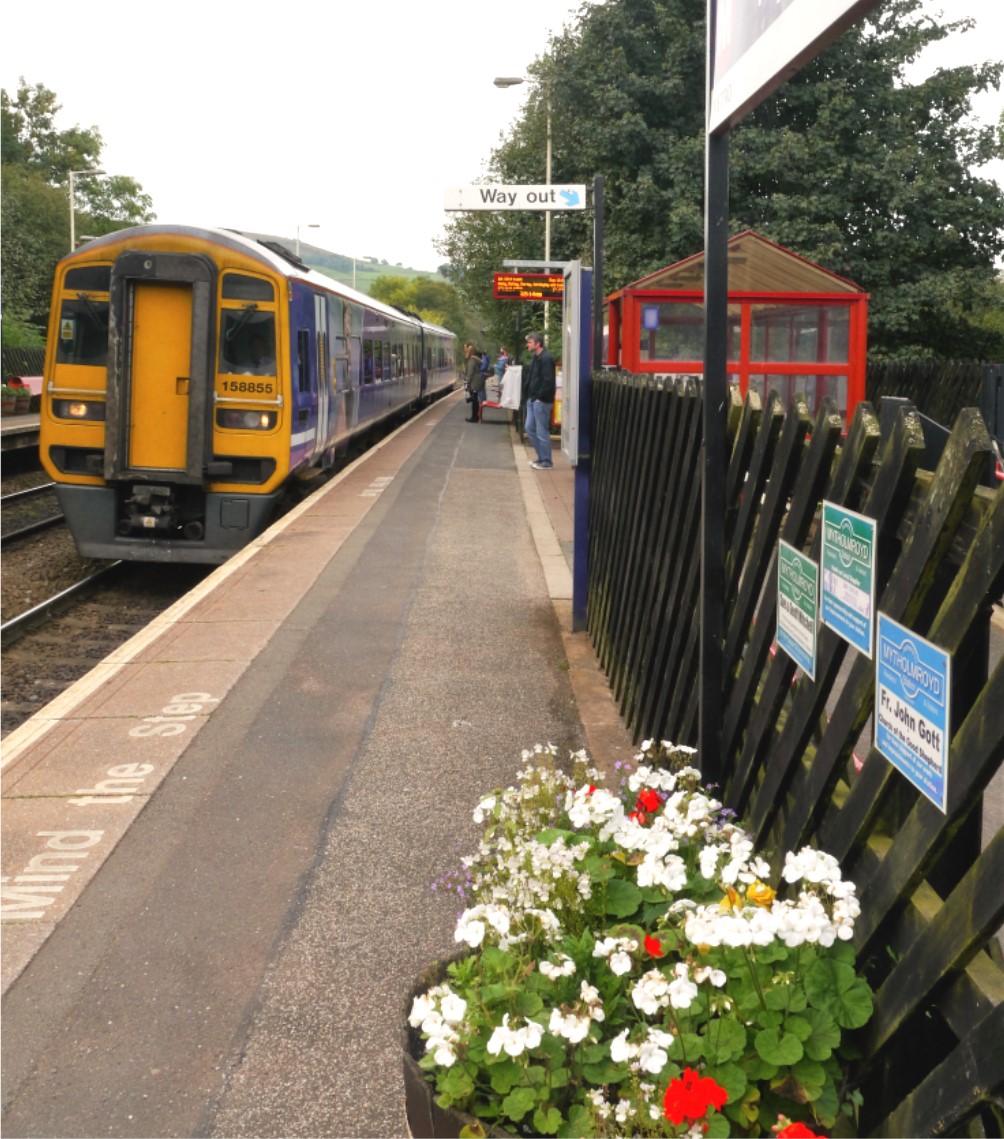
Floral displays, local history displays, artwork from schools, edible plants free to harvest at Todmorden… all products of community involvement make railway stations on our line more welcoming and hence train travel more attractive.

Seven years in a row have FoSBRS, the Friends of Sowerby Bridge Railway Station, scooped awards from Yorkshire in Bloom under the Britain in Bloom banner supported by the Royal Horticultural Society. This year the achievements of friends or partnership groups at no less than three stations in our immediate area have been recognised with awards, with accolades also from ACORP.

This year ACORP’s Community Rail Awards were presented in Southport on 29 September. Sowerby Bridge’s “Station 175” event, held over a weekend in October last year,  received an acclaimed joint third place in the competition for best community engagement event. Station 175 set out to draw in local people, to inform and educate about the impact of the railway on the town. It spotlighted  developments at the station since 1840 including recent projects of FOSBRS. The “175” weekend brought together all age-groups, involved local businesses, received a grant from Calderdale Council and was supported by Northern Rail and Trans Pennine Express. A year on, FoSBRS look to be going from strength to strength.

The Community Rail Awards presentation was the Sowerby Bridge Friends’ second award-collecting outing in a month. FOSBRS had already been decorated by Yorkshire in Bloom with not only a Gold (2 marks short of Platinum) in the Yorkshire Rose Open Spaces 2016 category but also a discretionary tourism award. Plaques in the station subway bear witness to success in this competition every year since 2010.

The Friends of Brighouse Station — dare we call them FOBS? — haven’t been going quite as long as their colleagues at Sowerby Bridge, but scored fantastic early success last year with rewards for spectacular floral colour. This year they are among the winners again, and expressed delight at receiving no less than three awards. Building on success as a new group in 2015, FOBS entered the In Your Neighbourhood section at Yorkshire in Bloom this year, and received not only the highest award Outstanding, but also — and this was a delightful surprise at the awards ceremony in York — a judges’ discretionary award for a small community.

Not to be outdone by Sowerby Bridge, the Brighouse group also went in for the Community Rail (ACORP) awards, and at the Southport event were assessed at the highest level — Gold — for the It’s Your Station competition. Regeneration of  an overgrown “eyesore” patch to what will become an attractive part of the station garden was recognised with third place in the  Small Projects competition.

For indeed why should stations not be gardens?

The Brighouse station friends are chaired by David Bedding, who reminded us that the group only started less than two years ago and said the awards “reflect the tremendous work put in by the whole group,” turning “drab and unloved” Brighouse station into “the clean, vibrant and colourful place it is now.”

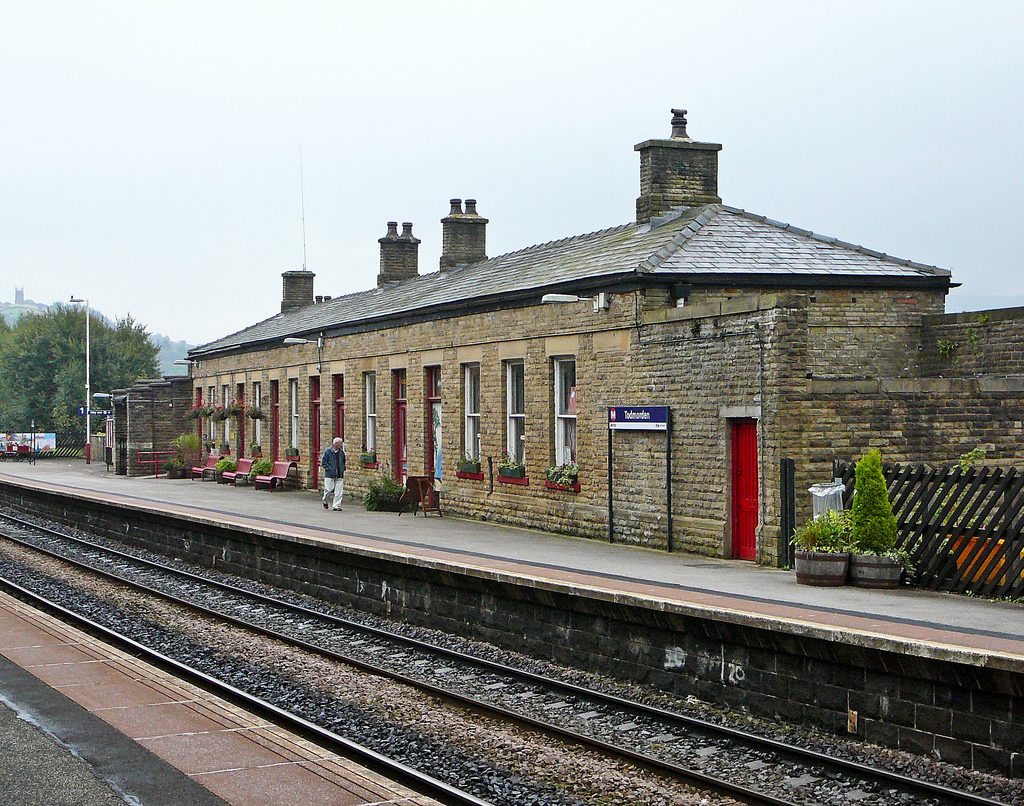
Mytholmroyd Station Partnership also saw success again this year with a Yorkshire in Bloom Level 5 Outstanding in the It’s Your Neighbourhood category. At the heart of a community still rebuilding after the Boxing Day flood, the group also received a discretionary community award for dealing with adversity. The Mytholmroyd group recently celebrated its tenth anniversary, and in what sounds to us like a first held, a “twinning” ceremony with the Friends of Bentham Station on the line between Skipton and Lancaster. The hope is that others will be encouraged to form adoption groups for local stations.

Mytholmroyd station is shortly to get a new car park, major investment funded through West Yorkshire Combined Authority from the West Yorkshire Plus Transport Fund. The adoption groups can never replace this kind of investment by the rail businesses and transport agencies, but what the “Friends” and “Partnerships” can do is provide little extras — artwork, culture, horticulture or whatever — that make a big difference.


43 Years of West Yorkshire Station Openings

Kirkstall Forge station opened in June to serve a major business and residential development in the Aire Valley and has an hourly service mainly of  Ilkley trains. It surely goes without saying that this frequency must be increased. The screens  were not working when we called but the ticket machine gave train running information.

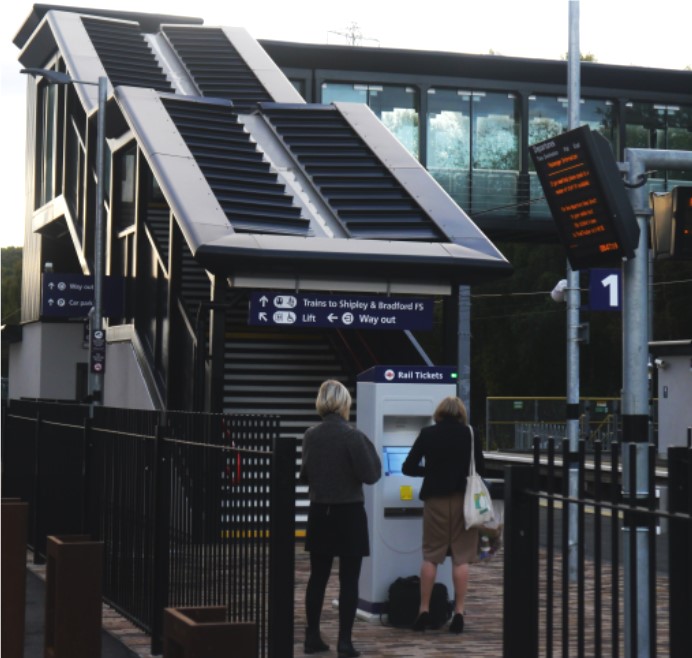
Up the valley Apperley Bridge opened last December with half-hourly Bradford Forster Square and Leeds trains, very much a park & ride with a new access road off the A658. It felt like a trek from the village on foot but a full 100-space car park was evidence of success. Apperley Bg has ramped access to the platforms (KLF has lifts).

West Yorkshire new and reopened stations go back 43 years to the opening of Baildon station way back in January 1973, actually a year before WY “Metro” came into being. Two members of the crowd for the first train later became early HADRAG members! Baildon is between Guiseley and Shipley served by half-hourly Ilkley-Bradford electric trains on the Wharfedale Line

Elland next!

Brighouse opened in May 2000 of course. And with Low Moor now under construction we are increasingly optimistic the county’s next new station could be at Elland.